
Revolutionizing Healthcare Manufacturing
Medical Injection Molding Overseas Company in USA
Trumould is a leading Medical Injection Molding Overseas Company, serving clients in the USA and India with precision and quality.
Medical injection molding refers to the process of manufacturing medical components, devices, and equipment using injection molding techniques. It involves injecting molten materials, often medical-grade plastics or silicone, into molds to produce intricate and precise shapes. This technology has revolutionized the healthcare industry by enabling the cost-effective mass production of vital medical tools.
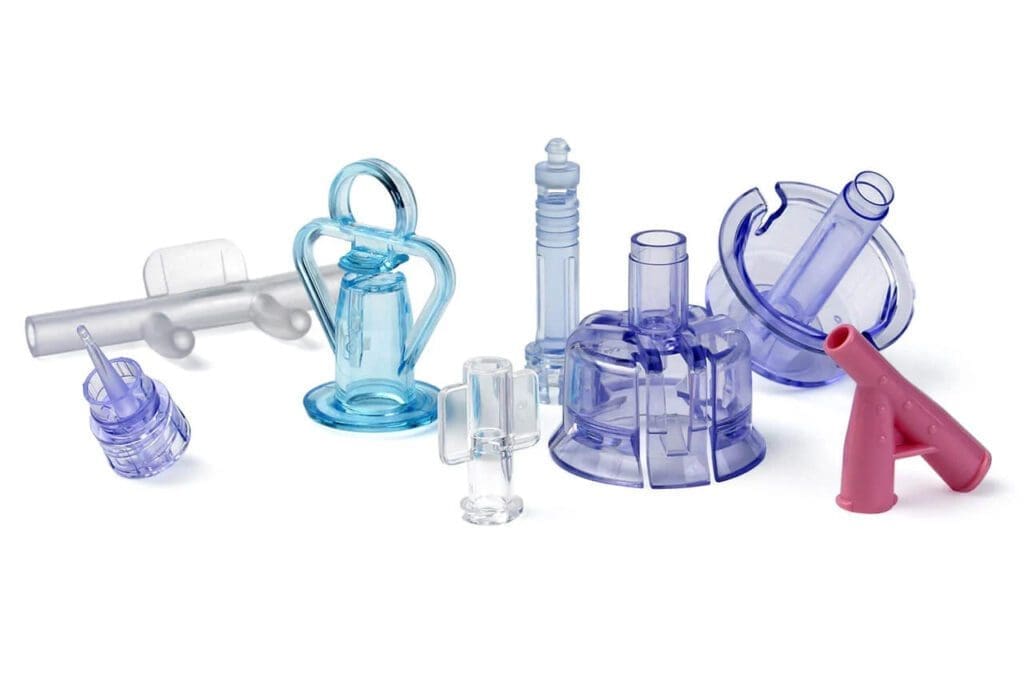
Our Medical Injection Molding Capabilities:
Medical Injection Molding Process
1. Mold Design and Fabrication – The process begins with the design and fabrication of molds. Molds are precision-made to replicate the desired shape of the final product.
2. Material Selection – Medical-grade plastics or silicone are chosen based on the specific requirements of the medical device. These materials are selected for their durability, biocompatibility, and sterilization capabilities.
3. Injection Molding – The selected material is heated until it reaches a molten state. It is then injected into the mold cavity under high pressure. After cooling and solidification, the mold is opened to reveal the finished product.
4. Quality Control – Strict quality control measures, including visual inspections and dimensional checks, are conducted to ensure that each component meets the required specifications.
Advantages of Medical Injection Molding
Future Trends and Challenges
Miniaturization
The trend towards smaller, more intricate medical devices presents a challenge for medical injection molding companies. They need to adapt their techniques to ensure the production of high-quality miniature components.
Material Innovation
Ongoing research into new materials with enhanced properties, such as antimicrobial surfaces and improved biocompatibility, will impact the landscape of medical injection molding.
3D Printing Integration
The integration of 3D printing with injection molding processes holds promise for creating complex molds more efficiently and rapidly, driving innovation in the industry.
Sustainability Efforts
Medical injection molding companies are increasingly exploring sustainable materials and practices to reduce the environmental impact of their operations.
Frequently Asked Questions
The medical device moulding process involves the shaping of medical-grade plastics and materials into specific components for medical devices. This precision engineering technique utilises various moulding methods, such as injection moulding, to create sterile, durable, and complex parts tailored for the healthcare industry.
Injection moulding is extensively utilised in the medical industry to produce precise, high-quality components for medical devices, surgical instruments, and disposable healthcare products. Its ability to mass-produce complex shapes with excellent material compatibility ensures safe, sterile, and cost-effective solutions for healthcare applications.
Plastic injection molding in the medical industry involves the process of creating medical devices and components by injecting molten plastic into moulds. This method is highly valued for its precision, efficiency, and ability to produce large volumes of complex parts with consistent quality and tight tolerances.
Medical grade plastics are specially formulated materials designed for use in the healthcare industry. They meet rigorous standards for biocompatibility, sterilisation, and durability, ensuring they can safely be used in medical devices, implants, and packaging without causing harm to patients.
Injection molding is widely used for producing a variety of medical products, including syringes, vials, drug delivery systems, implantable components, surgical instruments, and diagnostic devices. This method offers precision, scalability, and the ability to use biocompatible materials.
In medical injection moulding, materials used include thermoplastics like polypropylene (PP), polyethylene (PE), polycarbonate (PC), and polyvinyl chloride (PVC), as well as thermosetting plastics, silicone, and various biocompatible materials designed to meet stringent medical standards and regulations.
Typical lead times for producing medical components through injection moulding can range from 4 to 12 weeks. This timeframe includes design, prototyping, and production phases, but may vary based on complexity and specific requirements.